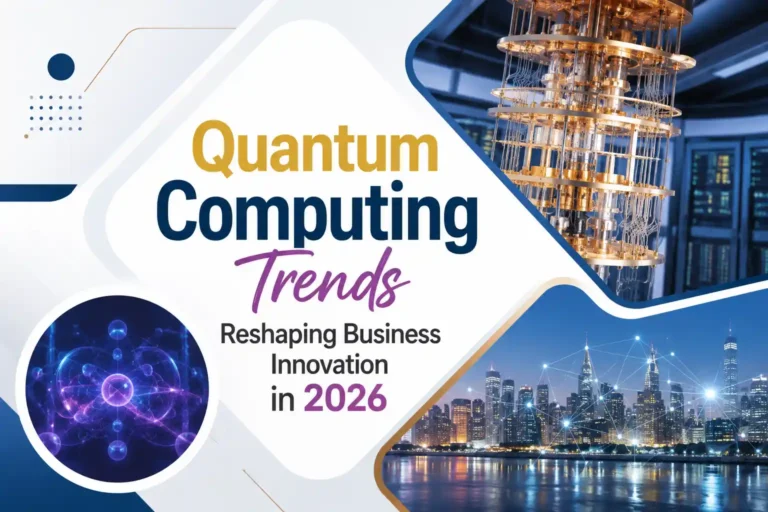
Quantum computing is rapidly moving from scientific research into real-world business applications. In 2026, organizations across finance, healthcare, manufacturing, logistics, energy, and cybersecurity are exploring quantum technologies to solve highly complex problems beyond the capabilities of traditional computers.
While conventional computers process information using bits, quantum computers use qubits that perform multiple calculations simultaneously. This breakthrough allows businesses to analyze massive datasets, optimize operations, accelerate research, and develop innovative solutions faster than ever before.
As governments and technology companies continue investing billions in quantum research, business leaders are preparing for a future where quantum computing becomes a major competitive advantage.
Why Quantum Computing Matters
Modern businesses generate enormous volumes of data that require advanced processing capabilities. Quantum computing enables organizations to solve optimization challenges, improve simulations, accelerate machine learning, and strengthen cybersecurity.
Rather than replacing traditional computing, quantum systems will work alongside existing technologies to solve highly specialized business problems.
Quantum computing supports:
- Complex data analysis
- Financial modeling
- Scientific research
- AI optimization
- Logistics planning
- Risk management
Finance Leads Early Adoption
Financial institutions are among the first industries investing in quantum computing. Banks and investment firms use quantum algorithms to optimize portfolios, detect fraud, improve market forecasting, and analyze financial risks more efficiently.
Faster calculations help financial organizations make better investment decisions while reducing operational risks.
Healthcare and Drug Discovery
Healthcare organizations are using quantum computing to accelerate medical research and pharmaceutical development. Scientists can simulate molecular structures more accurately, reducing the time required to discover new medicines and personalized treatments.
Quantum-powered research also supports genomics, disease prediction, and precision medicine.
Supply Chain Optimization
Global supply chains involve millions of variables that are difficult to optimize using traditional computing systems. Quantum computing helps businesses improve routing, warehouse operations, inventory management, and transportation planning.
Companies can reduce costs while improving delivery speed and operational efficiency.
Business applications include:
- Route optimization
- Inventory forecasting
- Warehouse automation
- Fleet management
- Production planning
- Demand forecasting
Cybersecurity Enters a New Era
Quantum computing is expected to reshape cybersecurity by enabling stronger encryption methods while also challenging existing security standards.
Organizations are preparing for the future by investing in quantum-resistant encryption and advanced security frameworks to protect sensitive business information.
Artificial Intelligence and Quantum Computing
Artificial Intelligence and quantum computing complement each other by improving data processing, optimization, and predictive analytics. Businesses expect quantum-enhanced AI to solve complex business problems much faster than today’s computing infrastructure.
Industries such as manufacturing, banking, healthcare, and retail are already exploring this combination.
Business Benefits
Organizations investing in quantum computing can gain significant advantages.
Key benefits include:
- Faster data processing
- Better business forecasting
- Advanced simulations
- Improved cybersecurity
- Optimized supply chains
- Accelerated research
- Smarter AI applications
- Increased operational efficiency
- Better decision-making
- Greater business innovation
Challenges Businesses Must Address
Although quantum computing offers enormous potential, organizations still face several implementation challenges.
Common challenges include:
- High infrastructure costs
- Limited quantum expertise
- Hardware complexity
- Software development
- Data security concerns
- Technology maturity
Businesses should begin building quantum readiness strategies while monitoring industry developments.
Industries Driving Quantum Adoption
Several industries are leading quantum computing investments.
- Banking and Finance
- Healthcare
- Pharmaceuticals
- Manufacturing
- Logistics
- Automotive
- Aerospace
- Energy
- Telecommunications
- Government Research
Future Outlook
Quantum computing is expected to become one of the most transformative technologies of the next decade. As hardware improves and commercial adoption expands, organizations will unlock new opportunities in innovation, optimization, cybersecurity, and scientific discovery.
Businesses that begin exploring quantum technologies today will be better prepared for tomorrow’s digital economy, where computational speed and intelligent decision-making will define competitive success.