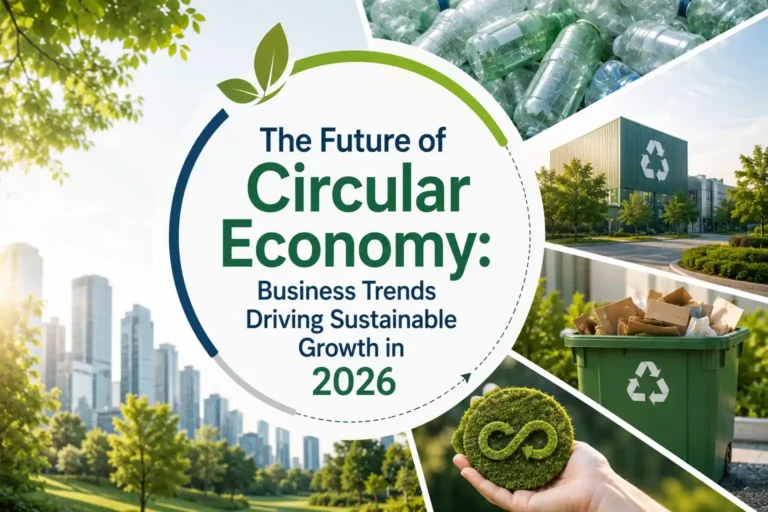
Businesses around the world are embracing the circular economy as a long-term strategy for sustainable growth. Unlike the traditional “take, make, and dispose” model, the circular economy focuses on reusing materials, reducing waste, extending product life cycles, and maximizing resource efficiency.
In 2026, organizations across manufacturing, retail, technology, healthcare, and consumer goods are redesigning products and operations to create more sustainable and profitable business models. As environmental regulations become stricter and customer expectations continue to evolve, circular economy practices are becoming a competitive advantage rather than an environmental initiative alone.
Why the Circular Economy Is Growing
Global businesses face increasing pressure to reduce carbon emissions, minimize waste, and use resources more responsibly. Governments are introducing policies that encourage recycling, sustainable manufacturing, and responsible product design.
At the same time, customers are choosing brands that demonstrate environmental responsibility and transparency throughout their supply chains.
The circular economy enables businesses to balance sustainability with profitability while improving operational resilience.
Product Design Is Becoming More Sustainable
Modern businesses are designing products that last longer, are easier to repair, and can be recycled or reused after their lifecycle ends. Manufacturers are using recyclable materials, modular components, and environmentally friendly packaging to reduce environmental impact.
Companies are also investing in research and development to create products that consume fewer natural resources while maintaining quality and performance.
Sustainable product strategies include:
- Eco-friendly product design
- Recyclable packaging
- Modular manufacturing
- Product refurbishment
- Repair services
- Material recovery
Technology Supports Circular Business Models
Digital technologies are accelerating circular economy initiatives. Artificial intelligence, IoT sensors, blockchain, and data analytics help organizations monitor resources, optimize production, improve inventory management, and track materials throughout the supply chain.
Businesses can identify opportunities to reduce waste while improving efficiency and profitability.
Technologies driving circular economy include:
- Artificial Intelligence
- Internet of Things (IoT)
- Blockchain traceability
- Digital twins
- Data analytics
- Smart inventory management
Business Benefits of Circular Economy
Organizations adopting circular economy principles gain multiple long-term advantages.
Key benefits include:
- Lower operating costs
- Reduced material waste
- Stronger ESG performance
- Improved brand reputation
- Greater resource efficiency
- Higher customer trust
- Better regulatory compliance
- Increased innovation
- Long-term profitability
- Sustainable business growth
Challenges Businesses Face
Transitioning to a circular economy requires strategic planning and investment.
Common challenges include:
- High implementation costs
- Supply chain redesign
- Limited recycling infrastructure
- Consumer awareness
- Product redesign complexity
- Regulatory compliance
Businesses that collaborate with suppliers, governments, and technology providers are better positioned to overcome these challenges.
Industries Leading the Transition
Several industries are adopting circular economy practices faster than others.
These include:
- Manufacturing
- Automotive
- Consumer electronics
- Fashion and apparel
- Healthcare
- Food and beverage
- Construction
- Retail
- Packaging
- Logistics
Future Outlook
The circular economy will continue shaping global industries as businesses seek sustainable ways to reduce costs, improve efficiency, and meet environmental goals. Companies that integrate circular business models into their operations will strengthen resilience, attract environmentally conscious customers, and create lasting value for stakeholders.
In 2026 and beyond, the circular economy will become a defining factor in business innovation, sustainable growth, and responsible leadership.