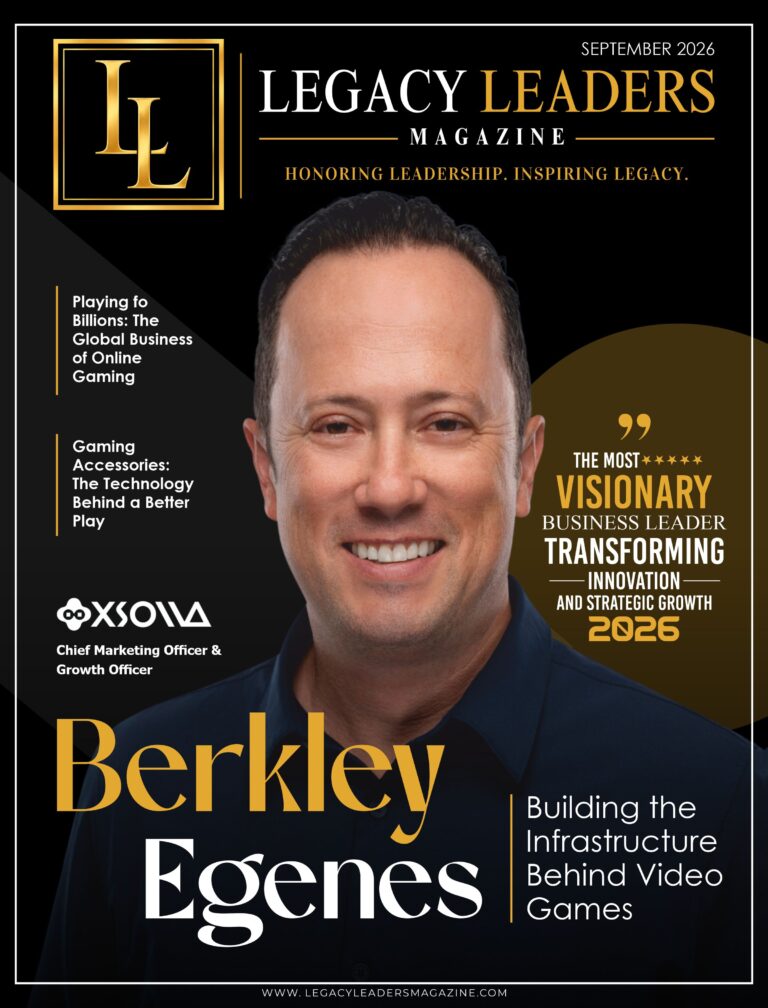
Berkley Egenes: Building the Infrastructure Behind Video Games
Every story the video game industry likes to tell centers on the same moment: the countdown clock, the trailer drop, the arena packed for an esports final. Far less gets said about what happens after the applause fades, when a studio has to turn a flash of attention into a business that survives the next patch, the next platform shift, the next quarter. That quieter, harder task, building commerce that lasts, is a career in itself.
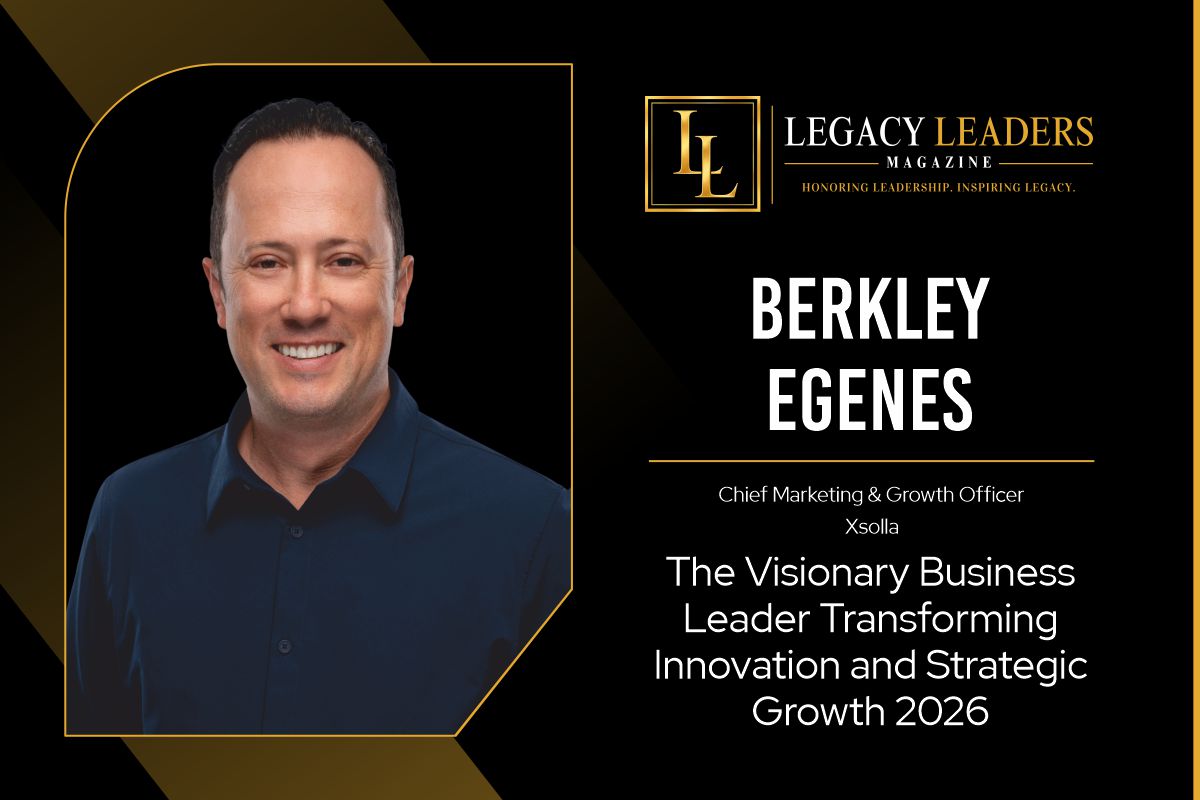
Berkley Egenes has built a career around exactly that. As the Chief Marketing & Growth Officer at Xsolla, he oversees the marketing and growth strategy for a company that helps video game developers handle the business side of making and selling their video games. He arrived there in 2020 as Vice President of Global Marketing, by way of esports, where he had helped build the Ghost Gaming brand, develop its partnerships, and grow its presence with fans across multiple games and markets.
The move from esports into video game commerce taught him something that has shaped his approach ever since. “Players have different cultures, preferences, payment habits, and motivations,” he says. “Great marketing therefore requires a global vision combined with local relevance, authenticity, and a genuine understanding of the player.” Xsolla gave him a way to put that understanding to work at scale, helping developers build sustainable businesses around the video games they make rather than treating each launch as a standalone event.
The Long Road to Growth
Before Xsolla, Egenes spent more than twenty years working across brands as different as Kellogg’s, AB InBev, NASCAR, IBM, Walmart, and CVS. “Every chapter shaped me differently,” he says, “but the common thread has been learning how to connect brands with people in meaningful ways.” Working across those household names exposed him to very different consumers, business models, and organizational cultures, and the lesson that stuck was to start with the audience and the business problem rather than the marketing channel.
Gaming, he has come to believe, is where those lessons finally came together, since it sits at the intersection of technology, entertainment, community, commerce, and culture all at once. He now treats marketing as a business discipline first: understand the customer, understand the economics, create differentiated value, and only then build the experiences that make that value tangible. That discipline is why the move into gaming felt less like a career pivot and more like an application of everything he had already learned.
Egenes joined Xsolla in 2020 as Vice President of Global Marketing. By December 2022, he had been promoted to Chief Marketing Officer, and the role has since expanded again into Chief Marketing and Growth Officer. The title change was not cosmetic.
“Adding growth to my mandate changed the conversation from how we tell a story to asking how everything we do contributes to sustainable growth,” he says. Marketing at Xsolla still owns brand, communications, creative, events, and demand generation, but growth means connecting those activities to acquisition, conversion, retention, and lifetime value, and working far more closely with product, sales, business development, finance, and operations.
Egenes wants marketing at Xsolla to function as both the voice of the company and an engine for its growth, pairing creative and brand thinking with data, experimentation, and commercial accountability.
Journeys, Not Channels
Egenes has built his approach to marketing at Xsolla around a specific idea: organize around the player’s journey, not the channel. “The key is to make the journey, rather than the channel, the organizing principle,” he says. “A player or a developer doesn’t experience our business as separate marketing channels; they experience a sequence of discovery, consideration, engagement, purchase, retention, and advocacy.”
The job of his team, as he describes it, is to find where they can add value or remove friction along the way. Technology and data play a role in that work, helping the team see patterns and personalize experiences, but Egenes is clear that they are meant to amplify human creativity, not replace it.
That distinction, between tools that surface patterns and people who decide what to do with them, is central to how he frames the role of technology at Xsolla. Consistency matters across a global organization, he says, but so does localization, so his team sets a clear global story and then lets local teams adapt it to their own markets and communities.
That cross-functional instinct was reinforced in 2023, when Egenes completed Stanford’s Emerging CMO program. “It’s fundamentally changed how I define marketing leadership,” he says of the experience, which pushed him to think beyond the marketing function itself and toward the business as a whole, building relationships across product, development, finance, sales, operations, community, and business development.
Each function sees a different part of the customer and business journey, in his telling, and those perspectives compound when they are combined. “I want marketers to understand how the technology works, how products create value, how revenue is generated, and what customers experience after the campaign ends,” he says. The result, he believes, is marketing that carries more credibility internally, serves customers more directly, and stays tied to business outcomes rather than drifting from them.
Removing Friction, Building Trust
That same instinct, organizing around what actually removes friction for the people on the other side of the relationship, shows up most clearly in two of Xsolla’s recent initiatives. Xsolla Agency connects developers with premium entertainment IP, work Egenes describes as helping studios use recognizable intellectual property to drive engagement and build longer-lived video games.
At the same time, the company expanded local payment methods across 18 EMEA and Asia markets, addressing what he calls a fundamental barrier: players need to pay in ways that feel familiar and trustworthy. “Both initiatives reflect the same philosophy,” he says, “removing unnecessary complexity so that developers can focus on creating great video games and reaching more players globally.”
That same logic sits behind Xsolla’s recent rebrand, which Egenes discussed publicly at Pocket Gamer Connects London 2026. The video game industry has changed and so has what developers expect from a partner. “The video game industry has evolved dramatically,” he says, “and developers increasingly want greater control over their player relationships, data, distribution, and revenue.”
The new positioning leans into developer independence and sustainable growth, and frames Xsolla as the infrastructure behind a successful game business rather than simply a transaction processor. “We wanted the Xsolla brand to reflect that future and communicate a clearer, more approachable story about what we actually do,” Egenes says.
At Pocket Gamer Connects London and across Xsolla’s 2026 events program more broadly, the goal has been to make the brand feel more human, collaborative, and community-oriented, so that developers and partners come away seeing Xsolla as a company that provides what they need.
Egenes is emphatic that initiatives like these belong inside a growth mandate, not outside it, because growth is ultimately about relationships and communities as much as transactions. Xsolla funded 45 developers to attend GDC 2026, opening the door to creators who might otherwise have struggled to attend one of the industry’s most important gatherings. The company also partnered with SpecialEffect to build accessible gaming setups for disabled players.
“Marketing has an important role in telling these stories,” Egenes says, “but the deeper value is participation.” “When a company invests authentically into its community,” he adds, “it builds trust, credibility, and relationships that last far longer than any campaign.” For him, growth was never only about transactions. It is about the relationships, communities, and opportunities that make an ecosystem worth investing in, the kind of foundation that, in his view, outlasts any single quarter.
Beyond Launch Day
“Developers should start thinking beyond launch day” Egenes says, describing what he sees as a turning point for the industry in 2026, a shift away from video games built for a single explosive release and toward platforms built to last. “The strongest opportunities increasingly come from video games that can evolve into long-term platforms with live operations, social systems, cross-play, meaningful progression, and communities that give players reasons to return,” he says.
Building for that shift requires the technology and operating model for continuous engagement from the start, not as an afterthought bolted on later. He also encourages studios to invest in first-party relationships and understand their own player data rather than relying entirely on external platforms, since the goal is not simply more personalization but better experiences that increase relevance, retention, and lifetime value.
Egenes’ advice to anyone stepping into a growth-focused marketing role in gaming starts in the same place his own thinking does: with the product itself. “Become utterly obsessed with understanding the product before you try to market it,” he says.
“Play the video game and understand the tech behind it.” The best growth leaders, in his estimation, are the ones who connect creativity with commercial understanding, who treat imagination and data as partners rather than competing instincts.
“Know the player, know the product, know the economies, and then use data and imagination together to build sustainable growth.”
It is the same instinct that pulled him out of the esports arena and into the far less visible work of building a business that outlasts any single moment of attention.