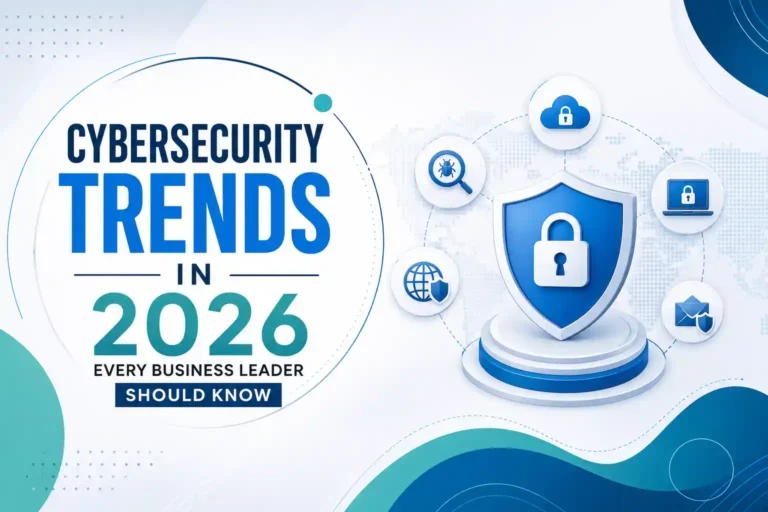
As businesses continue accelerating their digital transformation strategies, cybersecurity has become one of the most important priorities for organizations of every size. Companies are increasingly relying on cloud computing, artificial intelligence, connected devices, remote work environments, and digital collaboration platforms to improve productivity and remain competitive. While these technologies create significant opportunities for innovation and growth, they also introduce new security risks that cybercriminals are eager to exploit.
Cyberattacks are becoming more sophisticated, automated, and financially damaging. Attackers are no longer targeting only large multinational corporations—small businesses, startups, healthcare providers, educational institutions, and government organizations are equally vulnerable. Modern cyber threats can disrupt operations, expose confidential customer information, damage brand reputation, and result in millions of dollars in financial losses.
In 2026, cybersecurity is no longer viewed as simply an IT responsibility. It has evolved into a strategic business function that requires involvement from executives, board members, compliance teams, and every employee within an organization. Companies that invest in proactive cybersecurity measures are not only protecting their digital assets but also building customer trust, ensuring regulatory compliance, and creating a strong foundation for sustainable business growth.
The Evolving Cyber Threat Landscape
The cybersecurity landscape has changed dramatically over the past few years. Traditional cyberattacks such as phishing emails and malware remain common, but attackers are now leveraging artificial intelligence, automation, and advanced social engineering techniques to launch more convincing and effective attacks.
Cybercriminals continuously scan networks for vulnerabilities, target cloud infrastructure, exploit software flaws, and use AI-generated content to deceive employees and customers. These evolving attack methods have significantly increased the complexity of defending enterprise systems.
Organizations are responding by adopting advanced threat detection platforms, implementing continuous security monitoring, and strengthening their cybersecurity frameworks. However, keeping pace with rapidly changing threats requires ongoing investment, employee awareness, and regular updates to security strategies.
Artificial Intelligence Is Reshaping Cybersecurity
Artificial intelligence is transforming both sides of the cybersecurity battle.
Security professionals are increasingly using AI-powered tools to monitor network activity, detect unusual behavior, identify malware, analyze security logs, and automate incident response. AI can process enormous volumes of security data in real time, enabling organizations to identify threats much faster than traditional manual monitoring methods.
At the same time, cybercriminals are also using AI to improve the effectiveness of their attacks. AI-generated phishing emails are becoming increasingly realistic, making them difficult for employees to distinguish from legitimate communications. Attackers are also experimenting with deepfake technology, automated vulnerability discovery, and intelligent malware capable of adapting to different environments.
This growing AI arms race means businesses must continuously evolve their cybersecurity capabilities to stay ahead of emerging threats.
Zero Trust Security Is Becoming the New Standard
Traditional network security relied heavily on perimeter-based protection, assuming that users inside a corporate network could generally be trusted. Today’s hybrid work environments and cloud-first infrastructure have made that approach increasingly ineffective.
The Zero Trust security model follows a much stricter principle: never trust, always verify.
Every user, device, application, and network request must be authenticated and continuously validated before access is granted. Organizations implementing Zero Trust architecture require employees to verify their identity using multi-factor authentication, device validation, behavioral analysis, and least-privilege access policies.
Many enterprises are adopting Zero Trust not only to improve security but also to simplify compliance with increasingly strict global data protection regulations.
Cloud Security Remains a Business Priority
Cloud computing has fundamentally changed how businesses operate, enabling greater flexibility, scalability, and remote collaboration. However, cloud adoption also introduces new security challenges that organizations must carefully manage.
Misconfigured cloud environments remain one of the leading causes of data breaches. Companies are increasingly investing in cloud security solutions that provide encryption, identity management, workload protection, automated compliance monitoring, and real-time threat detection.
As businesses continue migrating mission-critical applications to public and hybrid cloud platforms, securing cloud infrastructure will remain one of the highest priorities for IT leaders throughout 2026.
Ransomware Attacks Continue to Grow
Ransomware remains one of the most destructive cyber threats affecting organizations worldwide.
Modern ransomware groups operate like professional businesses, using sophisticated attack techniques that involve stealing sensitive data before encrypting company systems. Victims are often threatened with public disclosure of confidential information unless ransom payments are made.
Many ransomware attacks now target supply chains, managed service providers, healthcare organizations, educational institutions, and manufacturing companies, where operational downtime can have severe financial consequences.
Organizations are responding by strengthening backup strategies, deploying endpoint detection systems, segmenting networks, and conducting regular cybersecurity drills to improve incident response capabilities.
Employee Awareness Is Critical
Technology alone cannot eliminate cybersecurity risks.
Industry studies consistently show that human error remains one of the leading causes of security incidents. Employees may unintentionally expose organizations to attacks by clicking malicious links, using weak passwords, downloading infected files, or responding to sophisticated phishing messages.
Regular cybersecurity awareness training helps employees recognize suspicious activity, understand social engineering tactics, and follow secure business practices. Organizations that build a strong security culture significantly reduce the likelihood of successful cyberattacks.
Regulatory Compliance Continues to Expand
Governments around the world are introducing stricter cybersecurity and data privacy regulations to protect consumers and critical infrastructure.
Governments around the world are introducing stricter cybersecurity and data privacy regulations to protect consumers and critical infrastructure.
Organizations must now comply with various national and international security standards depending on their industry and geographic location. Regulatory requirements increasingly emphasize risk assessments, incident reporting, data protection, identity management, and third-party vendor security.
Maintaining compliance not only helps businesses avoid financial penalties but also demonstrates a commitment to protecting customer information and maintaining responsible business practices.
Cybersecurity Best Practices for Every Business
Organizations can significantly improve their security posture by implementing several essential cybersecurity practices:
- Enable Multi-Factor Authentication (MFA) across all business accounts.
- Keep operating systems and software updated with the latest security patches.
- Regularly back up critical business data using secure offline or cloud-based storage.
- Encrypt sensitive customer and business information.
- Conduct regular penetration testing and vulnerability assessments.
- Monitor networks continuously for unusual activity.
- Restrict user permissions using the principle of least privilege.
- Develop a comprehensive incident response and disaster recovery plan.
- Provide ongoing cybersecurity awareness training for employees.
These proactive measures help reduce both the likelihood and impact of cyberattacks.
The Future of Cybersecurity
Cybersecurity is rapidly becoming more intelligent, automated, and predictive.
Future security platforms will increasingly rely on AI-powered Security Operations Centers (SOC), behavioral analytics, Extended Detection and Response (XDR), automated threat hunting, and predictive risk analysis to identify attacks before significant damage occurs.
Businesses are also expected to invest more heavily in identity-first security, passwordless authentication, secure software development practices, and continuous monitoring of cloud infrastructure.
As digital transformation accelerates across industries, cybersecurity will remain a fundamental pillar of business resilience and long-term success.
Why It Matters
Cybersecurity is no longer simply a technology issue—it is a critical business strategy. Organizations that prioritize security can protect customer trust, safeguard valuable intellectual property, maintain regulatory compliance, and reduce financial risks associated with cyber incidents.
As cyber threats continue evolving in sophistication, businesses that invest in modern security technologies, employee education, proactive risk management, and continuous innovation will be better positioned to thrive in an increasingly connected digital economy.
This article structure is well-suited for SEO because it includes comprehensive topical coverage, logical headings, and naturally incorporates keywords that search engines associate with cybersecurity and enterprise technology.