
Samsung Becomes First Tech Company to Earn 100 Trillion Won in a Quarter
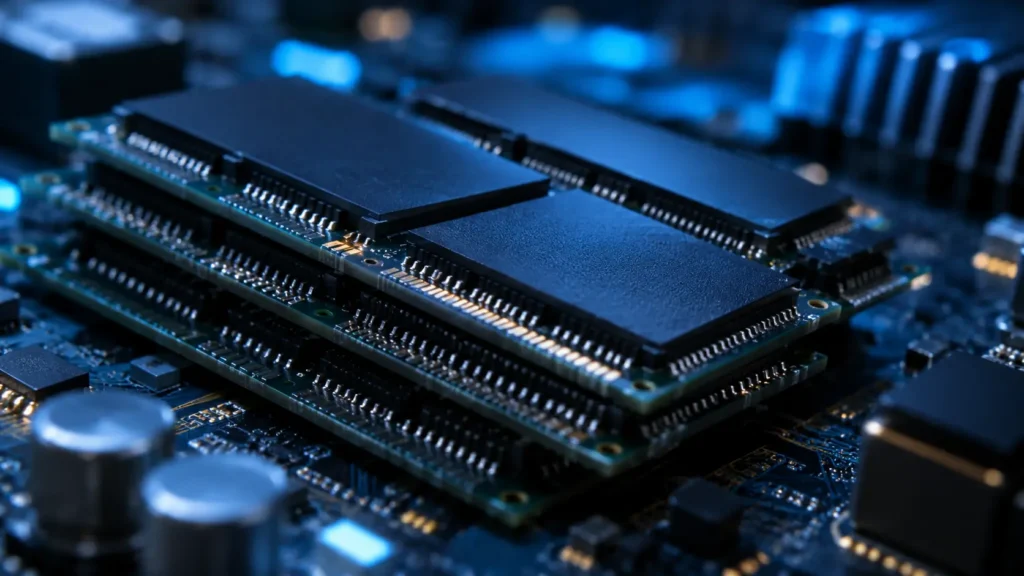
The AI boom has turned memory chips into one of the most profitable products in tech. Samsung Q3 profit, reported on 29 October, came in at a record 107.44 trillion won in operating terms, up 783.1% from a year earlier. Samsung says it is the first global tech company to post quarterly operating profit above 100 trillion won, according to Yonhap via Telangana Today.
What did Samsung Q3 profit numbers show?
For July to September 2026:
- Revenue rose 126.9% to 195.25 trillion won.
- Operating profit rose 783.1% to 107.44 trillion won.
- Net profit rose 514.6% to 75.13 trillion won, about $56.2 billion.
- The semiconductor division earned 106.5 trillion won, about 99% of the group’s operating profit.
It was Samsung’s fourth straight quarter of record revenue and operating profit.
Why memory is booming
AI servers need vast amounts of fast memory, especially high-bandwidth memory (HBM), which sits beside AI processors. Samsung said its revenue from HBM4 chips more than tripled from the previous quarter, and that it was the first in the industry to begin mass production and shipments of HBM4.
The company also said it has reached its goal of matching its HBM market share to its overall DRAM share. That matters because Samsung lagged rivals in earlier HBM generations.
Tight supply has pushed prices up across memory. When demand from AI data centres outruns what fabs can make, chipmakers capture the gap as profit.
Why the shares still fell
Despite the record, Samsung shares fell sharply in late Thursday morning trading in Seoul. The results slightly missed analyst expectations. When a stock has been priced for perfection, “record” is not always enough.
What It Means for Technology Buyers
Samsung expects memory demand to keep growing in the fourth quarter and the chip industry to stay strong in 2027, citing continued AI investment and supply constraints. For buyers, that points to firm memory prices for at least another year.
The effect reaches beyond data centres. Memory is in every laptop, phone and server, so AI demand competing for the same factory capacity can lift costs for ordinary devices too. Companies planning large hardware refreshes in 2027 should budget for that and lock in supply early.
The broader lesson is that AI’s profits are flowing first to whoever controls scarce hardware, a pattern also visible in the chip race covered in SpaceX Goes All-In on Nvidia Chips. For countries trying to build their own capacity, it shows why programmes like India Semiconductor Mission 2.0 target the supply chain and not just chip design.
This article is for information only and is not investment advice.