AI Data Center Power Constraints 2026: The New Bottleneck
Chip supply defined the AI infrastructure conversation through 2024 and 2025. That constraint is easing. Electricity is taking its place as the harder problem, and it’s reshaping where enterprises build, who they partner with, and how fast they can actually scale.
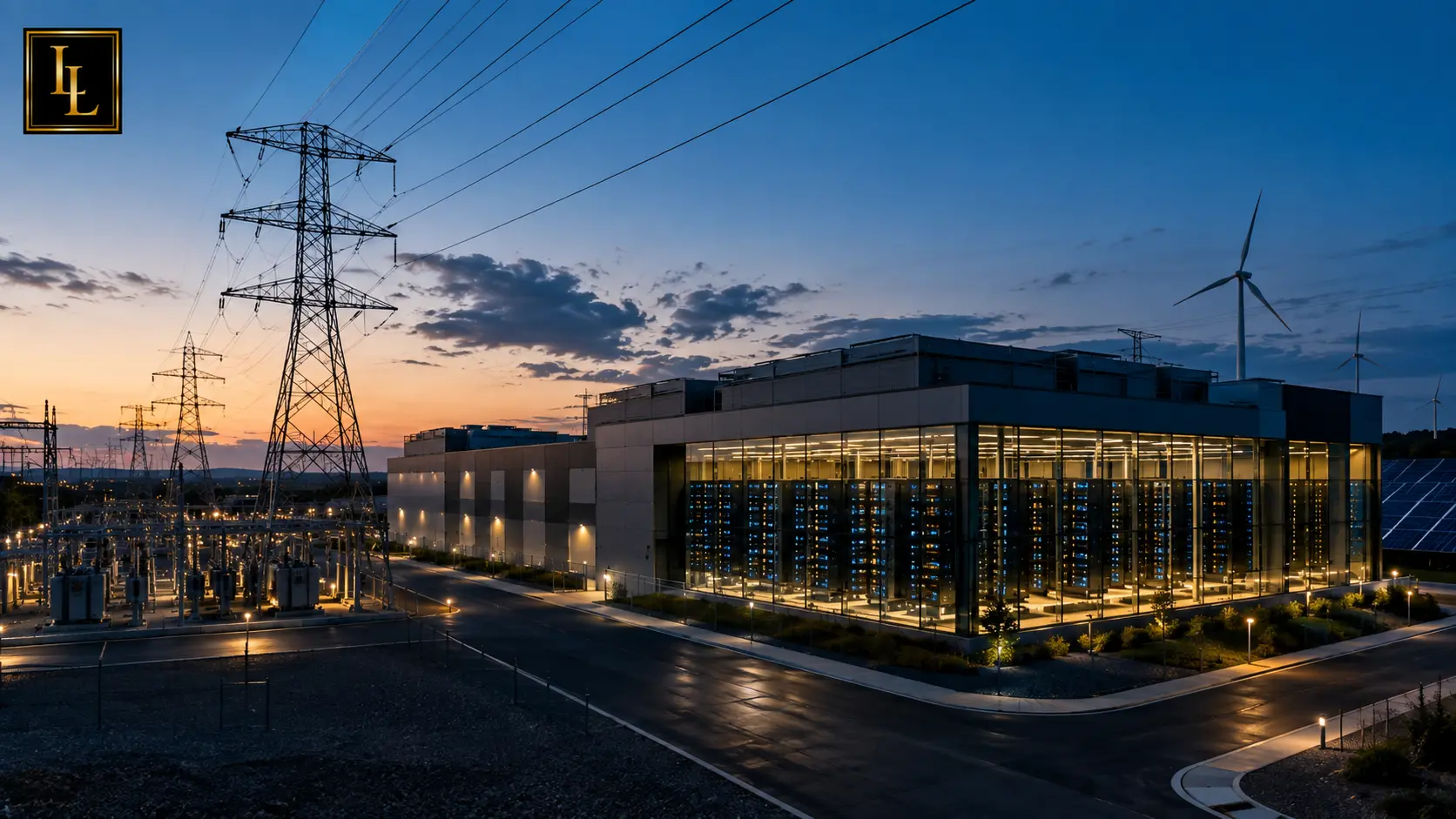
Enterprise AI roadmaps used to stall on GPU availability. A different bottleneck has taken over now, and it’s blunter and slower to fix: the electrical grid. Industry analysts increasingly point to power availability, not capital or hardware, as the primary constraint on data center development. The timelines involved run into years, not quarters. Electrical grid interconnections in major markets can take up to four years to complete. New capacity approvals in the US and Europe commonly run 24 to 36 months.
Why Is Power Suddenly the Bottleneck?
Part of the answer is sheer demand. The global data center sector will likely add nearly 100 gigawatts of new capacity between 2026 and 2030, roughly doubling current global capacity. The sector is expanding at an estimated 14% compound annual rate through the end of the decade. Grids built decades ago simply weren’t designed to absorb that kind of concentrated, high-density demand from a handful of large facilities at once.
The other part is a shift in what AI workloads actually look like. Training runs are intense but short and predictable, so a facility can plan around them. Inference runs continuously instead, and it’s latency-sensitive, so power draw stays elevated around the clock rather than spiking periodically. Enterprises are moving from experimenting with models to running them in production — the same shift underway in agentic AI adoption. That shift is pushing inference past training as the dominant source of AI power demand, and several analysts expect the transition to fully take hold within the next one to two years.
How Are Hyperscalers Responding?
The response so far runs on two tracks. The first is geographic: capital is following power availability rather than the reverse. Major providers are directing multi-billion-dollar investments toward regions that offer reliable, large-scale power rather than simply the best network connectivity. The second is structural. Hyperscalers are increasingly acting as grid participants rather than passive customers. They’re co-investing in transmission upgrades, signing direct power purchase agreements for dedicated renewable capacity, and building on-site generation and battery storage to sidestep public grid timelines entirely — an approach the industry often calls “bring your own power.”
What Does This Mean for Enterprises That Aren’t Hyperscalers?
Most enterprises don’t build their own data centers, but the constraint still reaches them indirectly. Capacity at colocation providers is tightening in the same power-rich regions hyperscalers are competing for. Lead times for new enterprise AI deployments increasingly track grid queues rather than procurement cycles. That’s pushing some organizations toward hybrid strategies that spread workloads across hyperscale cloud, private infrastructure, and edge deployments — less for cost reasons than to avoid depending entirely on one provider’s power position.
The Decision Ahead
For leaders planning AI infrastructure spend, the practical shift is in what to underwrite first. Vendor selection increasingly needs to include a real question about that vendor’s power strategy — where their capacity sits, how it’s secured, and whether their growth plans are realistic given regional grid constraints — rather than assuming compute availability is simply a matter of budget. The organizations moving fastest right now aren’t necessarily the ones with the biggest AI ambitions; they’re the ones that treated electricity as a strategic input at the start of the planning process instead of a line item to sort out later.For leaders planning AI infrastructure spend, the practical shift is in what to underwrite first. Vendor selection now needs a real question about that vendor’s power strategy: where their capacity sits, how they secured it, and whether their growth plans hold up given regional grid constraints. Assuming compute availability is just a matter of budget no longer works. The organizations moving fastest right now aren’t necessarily the ones with the biggest AI ambitions. They’re the ones that treated electricity as a strategic input from the start, instead of a line item to sort out later.