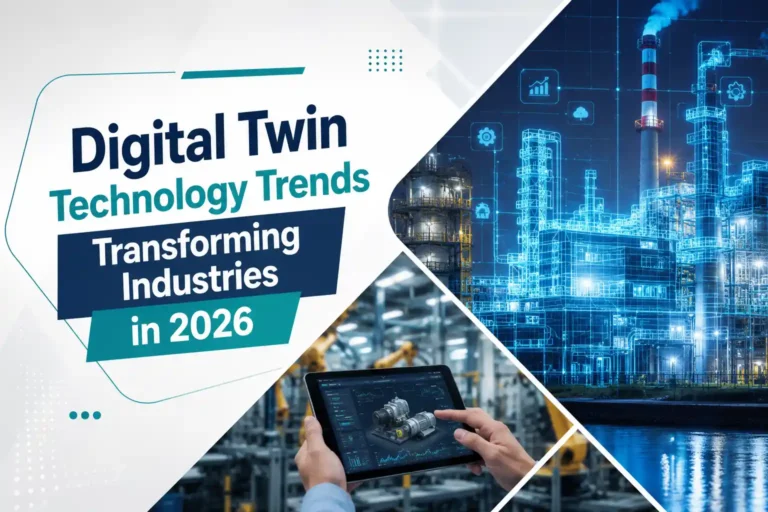
Digital Twin technology is becoming one of the most valuable innovations for businesses embracing digital transformation. In 2026, organizations across manufacturing, healthcare, logistics, construction, automotive, and energy are using digital twins to simulate real-world assets, monitor performance in real time, and make faster, data-driven decisions.
A digital twin is a virtual representation of a physical product, machine, building, or system that continuously receives data from sensors and connected devices. This allows businesses to predict problems, improve efficiency, reduce costs, and optimize operations before issues occur in the real world.
As companies continue investing in Industry 5.0 and intelligent automation, Digital Twin technology is rapidly becoming a competitive advantage.
What Is Digital Twin Technology?
A digital twin creates a real-time digital model of physical assets using IoT sensors, Artificial Intelligence, cloud computing, and data analytics. Businesses can monitor equipment performance, analyze operational data, simulate different scenarios, and improve decision-making without disrupting actual operations.
Instead of reacting to failures, organizations can predict them and take preventive action.
Why Businesses Are Investing in Digital Twins
Companies are adopting Digital Twin technology because it improves visibility across operations while reducing unnecessary downtime and operational risks.
Organizations can test production changes, optimize workflows, improve product quality, and reduce maintenance costs before implementing changes in the real environment.
Businesses use Digital Twins for:
- Equipment monitoring
- Production optimization
- Quality improvement
- Predictive maintenance
- Resource planning
- Risk management
Manufacturing Leads Digital Twin Adoption
Manufacturing remains one of the largest adopters of Digital Twin technology. Smart factories use digital replicas of machines and production lines to monitor equipment health, identify bottlenecks, and improve operational efficiency.
Manufacturers can simulate production processes before launching new products, reducing waste and accelerating innovation.
Benefits include:
- Reduced machine downtime
- Better production planning
- Faster product development
- Improved operational efficiency
- Lower maintenance costs
- Higher product quality
Healthcare Is Embracing Digital Twins
Healthcare organizations are beginning to use Digital Twin technology for hospitals, medical equipment, and patient care planning. Digital models help improve operational efficiency while supporting predictive healthcare and personalized treatment strategies.
Medical researchers also use simulations to study disease progression and optimize healthcare resources.
Smart Cities and Infrastructure
Governments and urban planners are using Digital Twins to manage transportation systems, energy networks, water distribution, and public infrastructure.
Real-time monitoring allows cities to improve traffic management, reduce energy consumption, and respond more effectively to emergencies.
Applications include:
- Smart transportation
- Energy management
- Water infrastructure
- Public safety
- Urban planning
- Environmental monitoring
AI and IoT Power Digital Twins
Artificial Intelligence and IoT devices continuously collect operational data that keeps Digital Twins updated in real time. AI analyzes this information to predict failures, identify trends, and recommend improvements before problems affect business operations.
Cloud computing enables organizations to manage Digital Twins across multiple locations while maintaining secure access to operational data.
Business Benefits
Organizations investing in Digital Twin technology gain measurable business advantages.
Key benefits include:
- Predictive maintenance
- Faster decision-making
- Reduced downtime
- Improved productivity
- Better resource utilization
- Lower operational costs
- Enhanced product quality
- Increased business agility
- Sustainable operations
- Stronger customer satisfaction
Challenges Businesses Must Overcome
Despite its advantages, Digital Twin implementation requires careful planning and investment.
Common challenges include:
- High implementation costs
- Complex system integration
- Data security concerns
- Skilled workforce requirements
- Large data management
- Infrastructure upgrades
Organizations that build scalable digital strategies are better positioned to maximize the value of Digital Twin technology.
Future Outlook
Digital Twin technology will continue expanding across industries as businesses demand greater operational visibility, predictive intelligence, and automation. Combined with Artificial Intelligence, cloud computing, and Industrial IoT, Digital Twins will become a critical foundation for smarter business operations and long-term innovation.
Organizations that invest in Digital Twin solutions today will improve efficiency, reduce operational risks, and strengthen their competitive position in the rapidly evolving digital economy.