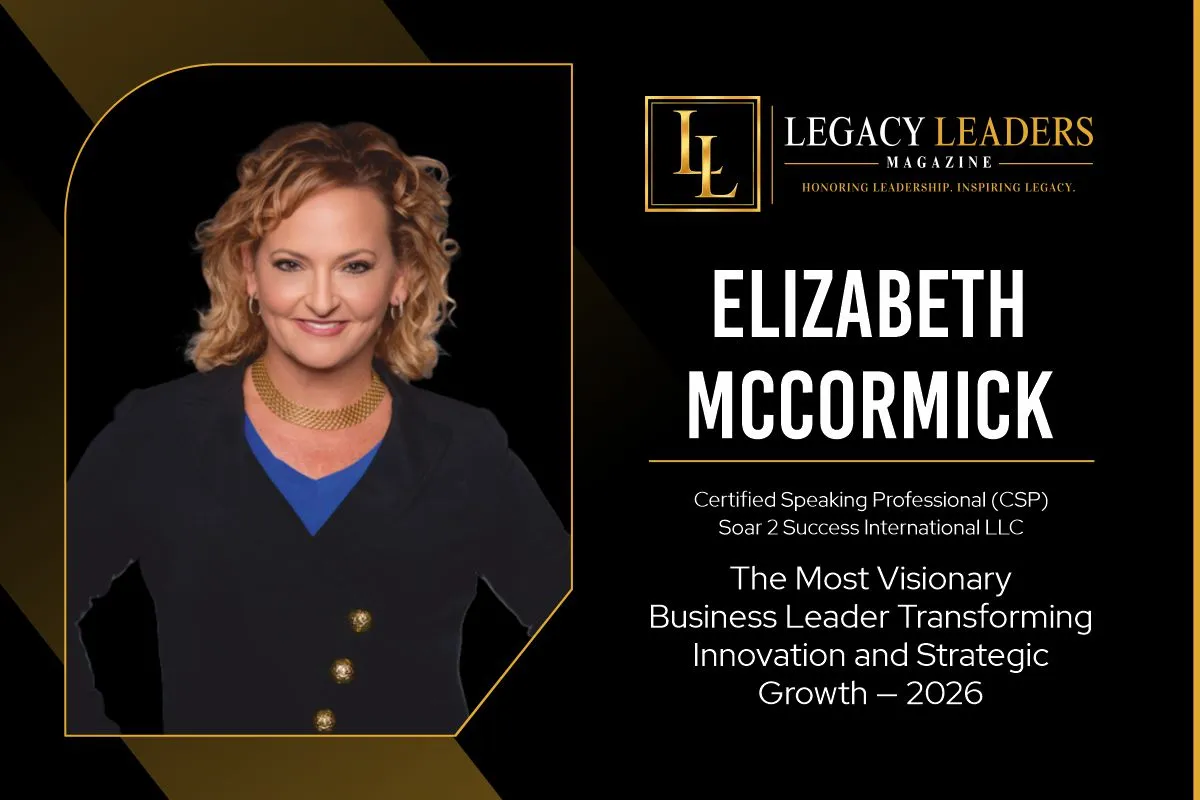
Elizabeth McCormick: Working with Organizations and Leaders to Make Better Decisions for Safer Workplaces
Stronger people and effective teams lead to better results.
When safety, communication, and leadership are not given enough attention, small mistakes can quickly lead to bigger problems. Poor decisions and a lack of focus affect employees, teamwork, and performance. Training empowers people to stay prepared, handle pressure, and respond better when unexpected situations arise.
Elizabeth McCormick, Certified Speaking Professional (CSP) and Founder of Soar 2 Success International LLC, helps organizations address these challenges through keynote speeches, seminars, workshops, and practical training focused on a safer workplace culture, leadership, communication, accountability, and performance. As a former U.S. Army Black Hawk helicopter pilot, she brings real-world lessons from aviation, where preparation, risk assessment, teamwork, communication, and sound decision-making are essential.
Through her FLY, First Lead Yourself, framework, she encourages people to take responsibility for their actions and influence while addressing issues such as distraction, complacency, and poor communication. Her programs combine real stories, activities, audience participation, and practical exercises to make safety and leadership easier to understand and apply.
McCormick’s experience and reach further strengthen her work. Her key achievements include:
- 2,000+ diverse audiences addressed worldwide
- Certified Speaking Professional (CSP), earned in 2019
- Author of 20+ books
She continues to expand Soar 2 Success through speaking, training, mentoring, publishing, and professional development, with initiatives including:
- Speakers at Sea Cruise
- The Velocity Society Mentoring
- Soar 2 Success Publishing
Her work is guided by a simple belief: when people learn to lead themselves first, they become better teammates, stronger leaders, and more responsible contributors, empowering organizations to build safer teams and achieve better results.
From Black Hawk Pilot to Safety Speaker
McCormick’s professional journey began in military aviation. As a U.S. Army Black Hawk helicopter pilot, she worked in an environment where preparation and responsibility were part of every mission. She learned to plan carefully, assess risks, communicate with her crew, follow established procedures, and remain steady when conditions changed.
These experiences gave her a strong understanding of how people perform under pressure. They also showed her that technical skills alone are not enough. A successful mission depends on people communicating clearly, paying attention, trusting one another, and accepting responsibility for their roles.
After a medical issue ended her aviation career, McCormick moved into corporate America and spent eight years working in supply chain management for three different manufacturers. Her new environment was different from the cockpit, but she noticed familiar challenges. Distraction, fatigue, poor communication, shortcuts, and a lack of attention affected both safety and performance in the workplace.
Over time, organizations began asking McCormick to share her aviation experiences with their teams. She saw an opportunity to connect lessons from the cockpit with everyday workplace situations. Her goal was not to turn employees into pilots, but to educate teams understand how preparation, awareness, communication, and personal responsibility could improve the way they work.
That connection became the foundation for her work as an inspirational safety speaker and trainer.
A Career Setback That Opened a New Door
McCormick did not originally plan to become a professional speaker. Her speaking career developed while she was still working in corporate supply chain management. People who knew about her aviation background began inviting her to speak and train their teams.
At first, she continued to view speaking as something she enjoyed alongside her corporate career. That changed in July 2009, when she was laid off.
Instead of immediately searching for another corporate position, McCormick decided to give professional speaking a real opportunity. She began building a business around the lessons and experiences she had collected throughout her career.
The decision proved to be a turning point. She realized that her background could help organizations address challenges that went beyond safety alone. The same principles she had learned in aviation could help people make better decisions, communicate more effectively, handle pressure, and take greater ownership of their work.
What began as an unexpected career setback became the starting point for Soar 2 Success International. It also reinforced something McCormick continues to share with others: when circumstances change, people may not control the situation, but they can choose how they respond to it.
Building Safer Teams Through Personal Responsibility
Workplace safety is often associated with policies, procedures, training, and compliance. McCormick believes these elements are important, but they are only part of the picture. The choices people make when no one is watching can have just as much influence on workplace safety.
This is where her approach differs. She trains employees to look at safety through the lens of personal responsibility. Instead of simply asking whether they are following the rules, she encourages them to consider how their actions affect their coworkers and the organization.
A person who notices a potential problem and speaks up can prevent an issue from becoming larger. Someone who recognizes fatigue can make a better decision before it affects performance. A team member who refuses to take an unnecessary shortcut can influence the people around them.
McCormick also believes that improving a safety culture should not be limited to people in management positions. Every employee has an opportunity to influence workplace culture through their everyday behavior.
Her goal is to empower organizations to move from compliance to commitment, where employees understand why safe practices matter and choose to take responsibility for them. This creates a stronger connection between safety, teamwork, and performance.
Real-World Solutions for Everyday Workplace Challenges
McCormick designs her programs around the challenges organizations face when employees need to stay focused, communicate clearly, take ownership, adapt quickly, and perform safely under pressure.
Drawing on her experience as a U.S. Army Black Hawk helicopter pilot and corporate professional, she delivers motivational keynotes, seminars, workshops, and training programs covering:
- Workplace safety
- Personal and tactical leadership
- Accountability
- High performance
- Resilience
- Decision-making
- Communication
- Motivation
- Sales resilience
- Managing change
A central part of her work is FLY, First Lead Yourself. Whether she is speaking to safety professionals, frontline employees, executives, sales teams, or emerging leaders, she encourages them to take responsibility for their preparation, awareness, attitude, decisions, actions, and example before trying to influence others.
Her approach focuses on creating experiences rather than lectures, using aviation stories, audience participation, meaningful activities, humor, reflection, and practical exercises to help people connect the lessons to real situations at work. Safety is another important part of her approach. While traditional training often focuses on policies, procedures, and compliance, McCormick places greater attention on the human side of safety, including personal responsibility, situational awareness, complacency, communication, decision-making, and looking out for others.
Her goal is to help people move beyond simply knowing what they should do and develop a personal commitment to making better choices. She believes that information can increase awareness, but a meaningful experience can influence behavior, which is the difference she aims to create through every program.
Making Safety a Personal Responsibility
For McCormick, safety becomes stronger when people understand its personal importance. Rules can tell employees what to do, but understanding gives them a reason to care about doing it correctly.
She encourages audiences to think about simple decisions that can affect safety. Taking a shortcut, ignoring a warning sign, failing to ask a question, overlooking a distracted coworker, or assuming that a routine task is risk-free can all create unnecessary problems.
Her aviation background gave her an appreciation for the importance of staying aware, and alert especially when situations become routine. She brings that lesson into the workplace by encouraging people to pause, assess what is happening, and make thoughtful decisions instead of simply going through the motions.
This approach also connects safety with leadership. Employees influence one another through the standards they accept and the behavior they demonstrate. When one person takes safety seriously, communicates a concern, or chooses the responsible option, that decision can influence the wider team.
For McCormick, this is the practical meaning of personal leadership. Safety is not something that begins and ends with a training session. It is reflected in the choices people make throughout the workday.
Employees Should Speak Up and Lead
One of the strongest signs of McCormick’s impact is when organizations invite her back after an event. Several clients have brought her in to speak with different divisions, locations, leadership teams, and employee groups because they wanted more people to benefit from the same ideas and discussions. The feedback she receives shows that audiences remember more than her Black Hawk helicopter stories. They remember how those lessons apply to their own work and leadership. Many have shared that they became more willing to speak up, communicate with their teams, take personal responsibility, recognize complacency, and think more carefully about how their daily choices affect those around them.
This is especially important in safety-focused programs. McCormick does not aim to repeat regulations that organizations already have safety professionals, policies, and procedures to address. Instead, she helps people understand why safety matters on a personal level and how individual actions can influence an entire team. She reminds audiences that success is not simply completing a work shift without an incident, but making the right decisions so everyone can return home safely to the people who depend on them. For McCormick, meaningful safety and leadership improvement starts with one person making a better decision, speaking up when it matters, and encouraging the person beside them to do the same.
Adapting the Changing Workplace
The workplace McCormick speaks to today is different from the one she entered earlier in her career. Artificial intelligence, digital communication, hybrid teams, remote work, multiple generations, and constant information have changed how people interact and make decisions.
These changes have influenced the way she designs her programs. She believes professional development needs to be practical, interactive, and connected to real situations rather than relying only on traditional presentations.
Her sessions use discussion, activities, and audience participation to keep people involved. Digital resources, virtual programs, books, and other learning materials also provide opportunities to continue learning beyond a live event.
At the same time, McCormick believes technology makes human judgment even more important. As more routine tasks become automated, employees still need to recognize when something does not look right, ask questions, communicate concerns, and make responsible decisions.
Her focus is therefore not on technology itself, but on working with people to use technological advancements without losing awareness, judgment, and accountability.
Preparing People for the Future of Work
McCormick expects the next five to ten years to bring greater attention to human performance. Artificial intelligence, automation, wearable technology, predictive tools, and digital learning will continue to influence how organizations operate.
These developments can improve efficiency, but they also create new challenges. Employees may become too dependent on technology, lose focus during repetitive tasks, or assume that automated systems will always identify problems for them.
McCormick believes organizations will need to place greater emphasis on critical thinking, communication, adaptability, judgment, and personal accountability. Human factors such as fatigue, distraction, mental overload, and complacency will remain important areas of concern.
Leadership development is also likely to become more inclusive. Strong workplace cultures cannot depend only on executives and managers. Employees at every level influence how teams communicate, respond to problems, and work together.
Soar 2 Success is preparing for these changes through experiential programs, workshops, books, digital resources, and professional development opportunities. McCormick wants these resources to encourage people to remain capable and responsible as the workplace continues to change.
Her view is straightforward: technology can advance work, while people must remain responsible for the decisions they make.
FLY: First Lead Yourself
The central idea behind McCormick’s work is FLY, First Lead Yourself.
The framework begins with personal leadership. Before people can influence a team or lead an organization, they need to understand how their own choices, attitude, preparation, and behavior affect the people around them.
McCormick uses aviation principles to make this idea easier to understand. Pilots prepare before a flight, monitor changing conditions, communicate with their crew, and make adjustments when necessary. They cannot control every condition, but they can control how prepared they are and how they respond.
The same principle applies in professional life. People face changing priorities, difficult conversations, unexpected problems, and pressure every day. “FLY” encourages them to take an active role rather than waiting for someone else to solve the problem.
McCormick also uses aviation-inspired language to make these lessons memorable. Staying out of “autopilot” reminds people to remain attentive. “Adjusting the flight plan” represents the need to adapt when circumstances change. “Taking the pilot’s seat” encourages people to accept responsibility for their own direction.
Through this framework, McCormick gives audiences a simple way to think about leadership before they even have a formal leadership title.
Preparing for Action When Conditions Aren’t Perfect
McCormick encourages people to overcome hesitation by focusing on preparation and action. Her aviation experience taught her that important decisions rarely come with perfect conditions or complete information.
Instead, professionals must assess the situation, use the information available, make a sound decision, and remain prepared to change course when necessary.
She believes this approach can also build confidence. When people practice, understand their responsibilities, prepare for challenges, and learn from experience, they become better equipped to handle pressure.
McCormick also encourages professionals to recognize the difference between experience and complacency. Familiar tasks can create confidence, but they can also cause people to stop paying attention or overlook warning signs.
Remaining curious, asking questions, accepting feedback, and continuing to learn can help people stay prepared without becoming overly comfortable.
For organizations, this means creating an environment where employees can learn, communicate concerns, and improve before a serious problem occurs.
Recognized Among the Top Speakers
McCormick’s career includes several milestones that reflect the different stages of her professional journey.
Earning her wings as a U.S. Army Black Hawk helicopter pilot, at a time when women represented less than 1% of Army pilots, remains one of her most significant achievements. It gave her experiences that would later become the foundation for much of her speaking and training.
In 2019, she earned the CSP designation, marking another important step in her professional speaking career.
She has since addressed more than 2,000 audiences worldwide, from smaller leadership groups to large events with more than 6,000 attendees. Her recognition by Global Gurus as one of the Top 30 Motivational Speakers, moving from #13 in 2025 to #11 in 2026, has also added to her professional recognition.
McCormick has authored 20 books and expanded her work beyond speaking through publishing, mentoring, professional development, and speaker-focused initiatives.
Yet she does not view awards and numbers as the only measures of success. The messages she receives from people who say her work changed the way they approach leadership, confidence, communication, or safety are equally important to her.
These personal responses remind her why she chose this career in the first place.
A Vision That Continues Beyond the Stage
McCormick’s long-term vision for Soar 2 Success is to expand its reach while creating resources that continue to provide value beyond a single speaking engagement.
She wants to build on the lessons she has gained through military aviation, corporate leadership, entrepreneurship, and professional speaking by developing more books, leadership and safety frameworks, experiential training, digital learning, and professional development resources.
She also plans to continue growing Speakers at Sea, The Velocity Society, and Soar 2 Success Publishing, giving speakers, authors, and professionals more opportunities to develop their knowledge and share it with others.
For McCormick, legacy is not simply about the number of stages she has visited or the awards she has received. It is about what people do with the lessons after they hear them.
She wants employees to make better decisions and return home safely. She wants leaders to communicate clearly and accept responsibility. She wants professionals to recognize abilities they may not have seen in themselves. And she wants the people she mentors to carry their own ideas and messages into places she may never reach.
That is what makes her work larger than a speaking career. The goal is not simply to deliver a memorable presentation, but to give people ideas they can use, share, and carry forward.